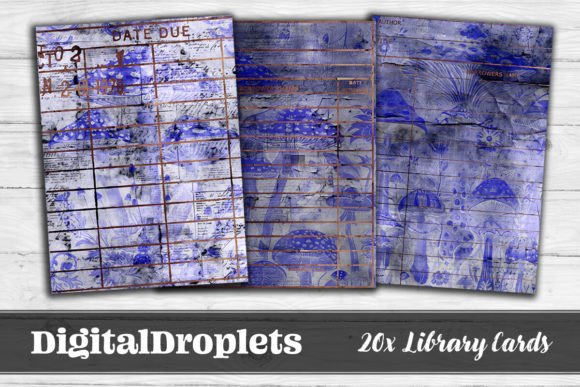
Bringing Whimsy to Paper Crafts with Mushroom Library Cards Vol.7
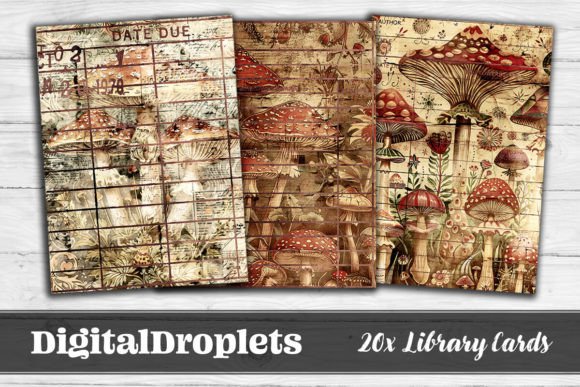
There is a specific kind of nostalgia that comes with the smell of old books and the texture of aged paper. For scrapbookers, journal keepers, and stationery designers, capturing that vintage academic aesthetic is often a priority. Mushroom Library Cards Vol.7 offers a fascinating intersection of botanical illustration and library nostalgia. It is not merely a set of graphics; it is a curated collection of 20 distinct designs that blend the whimsical nature of fungi with the structured form of a traditional library checkout card.
This collection is designed specifically for the creator who values texture and storytelling. Each file features high-resolution details at 300dpi, ensuring that whether you print them for a physical junk journal or use them as digital layers in a branding project, the quality remains crisp. The visual character of this set lies in its ability to be both educational and enchanting, making it a versatile asset for a wide range of creative professionals.
The Visual Language of Fungi and Ephemera
Understanding the style of Mushroom Library Cards Vol.7 is key to using it effectively. These designs function as display font elements, meaning they are meant to catch the eye and set a mood rather than convey long paragraphs of information. The visual personality is distinctly "cottagecore" meets "academic." You will notice the intricate linework of the mushroom illustrations overlaid onto the structured grid lines of a library card. This combination creates a unique tension between the wild, organic shapes of nature and the rigid, human-made order of a catalog system.
From a design perspective, these assets act as powerful focal points. In the world of modern typography, we often talk about hierarchy—guiding the viewer's eye from the most important element to the least. These library cards serve as perfect anchors for that hierarchy. They possess a handmade quality that resonates with audiences looking for authenticity. Unlike a generic stock photo, these PNG files have a distinct texture that mimics real-world ephemera, adding depth to any composition.
Practical Applications for Creators and Businesses
While the immediate application for these files is within physical crafting—such as scrapbooking, card making, and junk journaling—their utility extends much further into digital realms. For graphic designers and brand strategists, Mushroom Library Cards Vol.7 offers a unique set of design assets that can differentiate a brand in a crowded market.
Consider the following scenarios where this collection shines:
- Editorial Design and Publishing: If you are laying out a magazine, a zine, or a book cover, these cards work beautifully as creative font companions. They can be used as chapter headers, margin decorations, or background textures to give the publication a cohesive, vintage feel.
- Packaging Design: For small business owners selling artisanal goods—perhaps homemade teas, dried botanicals, or pottery—these designs add an immediate layer of perceived value. Using them as hang tags or box inserts reinforces a brand identity rooted in nature and craftsmanship.
- Digital Content and Web Design: In web design, texture is often lost in the flatness of screens. These high-resolution files can break up whitespace effectively. They serve as excellent backgrounds for quote graphics or featured images in blog posts about nature, reading, or slow living.
- Social Media Graphics: For social media graphics, standing out is difficult. A library card graphic overlaid with a mushroom illustration provides a scroll-stopping visual that feels warm and inviting, perfect for lifestyle influencers or educators.
Integrating the Assets into Your Workflow
When working with premium font alternatives and high-quality graphics like these, integration is about more than just drag-and-drop. To truly leverage Mushroom Library Cards Vol.7, you need to think about context and pairing. Because the style is quite specific, it pairs best with typefaces that don't compete for attention.
For example, if you are using one of the library cards as a header element, pair it with a clean sans serif font for your body copy. This contrast allows the ornate details of the mushroom illustration to breathe without overwhelming the reader. Alternatively, if you want to lean into the vintage aesthetic, a classic serif font can complement the library card format, mimicking the look of old book typography.
However, be cautious with script fonts or overly decorative handwritten fonts. While they share a similar vibe, combining too many intricate styles can result in visual clutter. The goal is to let the library cards act as the artistic centerpiece while your typography remains legible and functional. This approach ensures that your logo design or layout maintains professionalism and readability.
Evaluating Fit and Licensing
Before incorporating any asset into a commercial project, evaluating the fit and the licensing is a standard professional practice. Mushroom Library Cards Vol.7 is structured to support both personal and commercial usage, which is essential for entrepreneurs and marketers. Whether you are creating merchandise to sell or marketing materials for a client, having the right to use the assets is non-negotiable.
When testing these designs for your project, consider the "squint test." Step back from your screen or printout and squint your eyes. If the library card graphic dominates too heavily, it may need to be scaled down or faded slightly to act as a background texture rather than a foreground element. If it disappears, you may need to increase the contrast or pair it with a bolder typeface to create a stronger visual hierarchy.
Ultimately, this collection is about adding a layer of storytelling to your work. It moves beyond standard font pairing and enters the realm of mixed media, where illustration and typography work together to evoke a specific feeling. For the crafter, it is a way to add a professional touch to a handmade gift. For the designer, it is a way to inject personality into a digital interface. By treating these assets as integral parts of your design system rather than just decoration, you ensure that your final product is cohesive, engaging, and memorable.